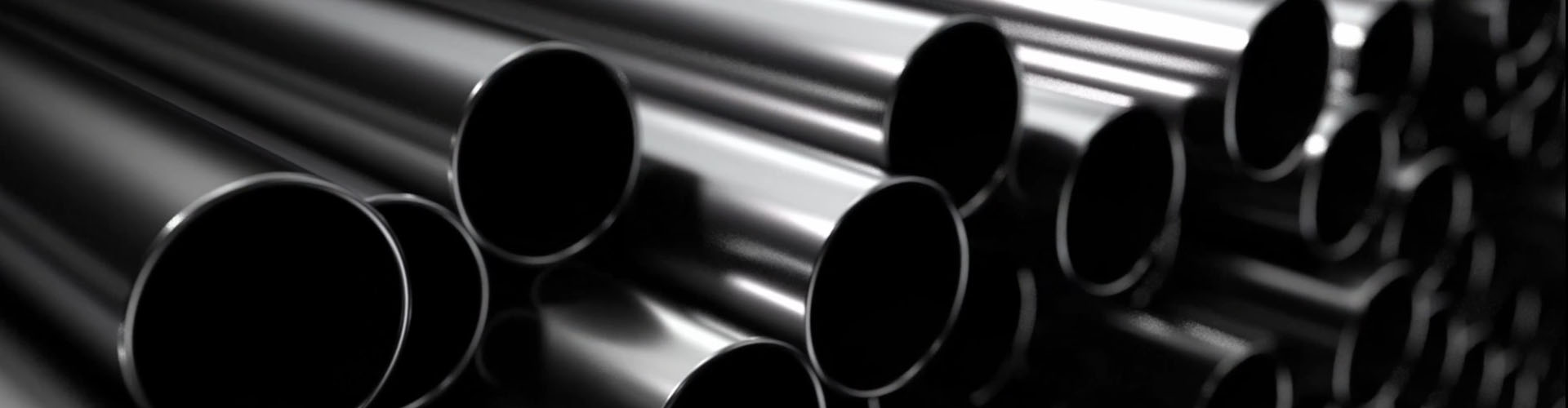
Stainless Steel High Pressure Pipe
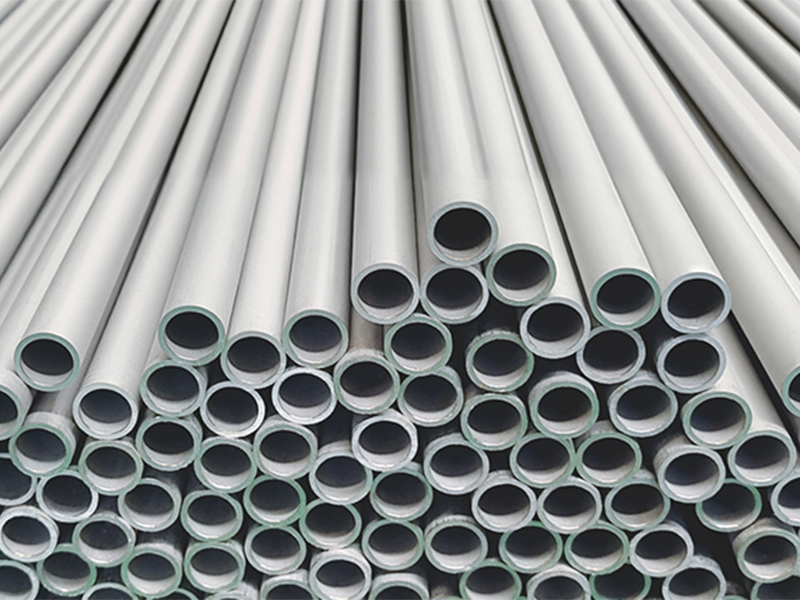
Zhejiang Kangxin Steel Pipe Co., Ltd. (Kangxin) is a China-based seamless stainless steel pipe manufacturer with over 40 years of production experience, specialising in high-pressure and ultra-high-pressure pipe and tube for demanding industrial applications.
Our high-pressure seamless pipes are manufactured to ASTM A312, ASTM A269, ASTM A213, EN 10216-5, JIS G3459, and GB/T 14976 standards, with working pressures up to 60,000 psi (4,134 bar) depending on wall thickness, grade, and configuration. Available grades include 304/304L, 316/316L, 317L, 321, 347, 310S, 2205 duplex, 2507 super duplex, and nickel alloys (Inconel, Hastelloy, Incoloy). Custom outer diameter, wall thickness, and length are available on request.
As a holder of ABS, DNV GL, Bureau Veritas (BV), Lloyd’s Register (LR), NORSOK M-650, PED 2014/68/EU, AD 2000-Merkblatt, and ISO 9001/14001/45001 certifications, Kangxin supplies verified mill product — not traded material. All pipes are subject to full dimensional inspection, hydrostatic testing, and mechanical testing. Mill test reports to EN 10204 3.1 and 3.2 are available.
Wall thickness configurations range from Schedule 40S through XXS, with heavy-wall and custom bore options for high-pressure process, instrumentation, and wellhead applications. Pressure ratings are calculated per ASME B31.3.
Annual supply capacity: 25,000 metric tons. Lead time: in-stock orders within 7 days; production orders 15–60 days depending on specification.
- Size Range 6-1016 mm
- Thickness Range 1-65 mm
- Length ≤ 22 m
What Is a High-Pressure Stainless Steel Pipe?
A high-pressure stainless steel pipe is a seamless tubular product engineered to contain elevated internal pressures without leakage or structural failure. Unlike standard pipe, high-pressure pipe is produced with tighter dimensional tolerances, heavier wall thickness, and controlled mechanical properties to meet the demands of critical service. It offers inherent resistance to corrosion from acids, alkalis, chloride-bearing media, and oxidising environments — making it suitable where carbon steel would fail prematurely.
Typical applications include hydraulic systems, chemical injection lines, instrumentation tubing, wellhead and subsea control systems, heat exchangers, and high-pressure steam lines in power generation.
Because Kangxin manufactures these pipes by seamless process — hot piercing followed by cold drawing — there are no weld seams and no associated heat-affected zones, which are common failure points in welded pipe under cyclic or sustained high pressure.
Pressure Classification
The pressure rating of a stainless steel pipe is governed by outside diameter, wall thickness, material grade, and operating temperature, calculated per ASME B31.3. Industry classifications are generally:
| Classification | Pressure Range |
| Medium Pressure | Up to 20,000 psi (1,378 bar) |
| High Pressure | 20,000 – 60,000 psi (1,378 – 4,134 bar) |
| Ultra-High Pressure | Above 60,000 psi (4,134 bar) |
Note: These boundaries are not universally standardised. Swagelok, Parker, and other system designers may apply different thresholds depending on fitting series and application.
Manufacturing Process of Stainless Steel High-Pressure Seamless Pipes
The stainless steel high-pressure seamless pipe is made by selecting a strong billet of stainless steel, and heating and piercing it to form a hollow shell. The next step is to pass this shell through hot-working and cold-drawing to get its precise dimensions. After that, we perform solution annealing to retain the pipe’s mechanical properties and corrosion resistance. The last step is pickling and straightening, and then it is sent for testing.ing to retain the pipe’s mechanical properties and corrosion resistance. The last step is pickling and straightening, and then it is sent for testing.
Key Properties of SS High Pressure Pipe
High Pressure resistance Pressure-bearing capability in stainless steel pipe derives from wall thickness and material yield strength. For thick-wall seamless pipe, working pressure is calculated using the Lamé equation (thick-wall cylinder theory) or ASME B31.3 formula:
P = 2SE·t / (D − 2y·t)
where S is the allowable stress for the grade at operating temperature, t is minimum wall thickness, D is outside diameter, E is quality factor (1.0 for seamless), and y is a temperature coefficient. Higher-strength grades such as 2205 duplex and 2507 super duplex achieve significantly higher pressure ratings than 304/316 at equivalent wall thickness.
- Thick wall design: This design of the pipe improves its ability to withstand high levels of internal pressure and harsh operating conditions.
- Excellent Corrosion Resistance: The chemical composition (chromium, nickel, etc) creates a protective passive layer when the pipe is exposed to oxygen. This layer helps it to resist oxidation, pitting, crevice, and general corrosion.
- Temperature Resistance: The temperature resistance is also a result of the pipe’s chemical composition, as elements like chromium, nickel, and molybdenum keep the alloy stable in various temperatures.
- Ductility and Flexibility: This pipe gets its ductility mainly from its austenitic microstructure, present in grades like 304 and 316.
Technical Specifications of High-Pressure Stainless Steel Pipes
The technical specifications of high-pressure stainless steel pipes include the working pressure, sizes, and tolerances. Each grade has its own dimensions and tolerances.
High Pressure Stainless Steel Pipe — Working Pressures
Working pressure varies by outside diameter, wall thickness, material grade, and operating temperature. All values below are calculated per ASME B31.3 for seamless 316/316L stainless steel at ambient temperature (–29 to 38 °C). Two ratings are provided: Annealed (fully annealed, S = 138 MPa / 20,000 psi per ASTM A269) and Cold-Drawn (1/8-hard, Lamé equation, S = 207 MPa / 30,000 psi). Ratings for other grades (317L, 2205, 2507) differ; contact Kangxin for grade-specific calculations.
| Medium Pressure Up to 20,000 psi Up to 1,378 bar / 138 Mpa | High Pressure 20,000 – 60,000 psi 1,378 – 4,134 bar / 138 – 414 Mpa | Ultra-High Pressure Above 60,000 psi Above 4,134 bar / 414 Mpa | ||||||||
|---|---|---|---|---|---|---|---|---|---|---|
| OD (mm) | OD (in) | ID (mm) | ID (in) | WT (mm) | WT (in) | Annealed 316SS ASME B31.3 · S = 138 Mpa | Cold-Drawn 316SS Lamé · S = 207 Mpa | kg/m | ||
| PSI | Mpa | PSI | Mpa | |||||||
| 6.35 | 1/4 | 2.39 | 3/32 | 1.98 | 0.0781 | 16,650 | 114.7 | 22,550 | 155.6 | 0.216 |
| 6 | — | 2.2 | — | 1.9 | — | 17,000 | 117.1 | 22,900 | 157.9 | 0.194 |
| 6.35 | 1/4 | 2.29 | 0.09 | 2.03 | 0.0799 | 17,200 | 118.6 | 23,100 | 159.4 | 0.218 |
| 9.52 | 3/8 | 3.2 | 1/8 | 3.16 | 0.1245 | 18,100 | 124.7 | 23,950 | 165 | 0.501 |
| 6.35 | 1/4 | 1.59 | 1/16 | 2.38 | 0.0938 | 21,450 | 147.7 | 26,500 | 182.6 | 0.235 |
| 9.52 | 3/8 | 1.6 | 1/16 | 3.96 | 0.156 | 24,950 | 172.1 | 28,350 | 195.6 | 0.549 |
| 14 | — | 5 | — | 4.5 | — | 17,300 | 119.4 | 23,250 | 160.2 | 1.065 |
| 14 | — | 8 | — | 3 | — | 10,350 | 71.4 | 15,250 | 105.1 | 0.822 |
| 14.3 | 4/7 | 7.94 | 5/16 | 3.18 | 0.1252 | 10,850 | 74.7 | 15,850 | 109.4 | 0.881 |
| 19.05 | 3/4 | 9.52 | 3/8 | 4.77 | 0.1878 | 12,550 | 86.4 | 18,050 | 124.4 | 1.697 |
| 14.3 | 4/7 | 4.76 | 3/16 | 4.77 | 0.1878 | 18,200 | 125.6 | 24,050 | 165.7 | 1.132 |
| 30 | — | 10 | — | 10 | — | 18,200 | 125.5 | 24,000 | 165.6 | 4.983 |
Calculation basis : ASME B31.3 Process Piping (annealed); Lamé thick-wall cylinder equation (cold-drawn). Formula: P = 2SEt / (D − 2yt), where E = 1.0 (seamless), y = 0.4, ambient temperature.
Material : Seamless 316/316L stainless steel per ASTM A269 / A312. Higher-strength grades (317L, 2205 duplex, 2507 super duplex) achieve greater pressure ratings at equivalent wall thickness — contact Kangxin for grade-specific data.
Note : Ratings shown are for pipe only, at ambient temperature, with no allowance for corrosion, bending, or fitting losses. System working pressure must account for end fittings, temperature derating, and applicable design code safety factors. Elevated temperature derating factors available on request.
Tolerances of SS High Pressure Pipe
Different grades have different dimensional tolerances, which affect the performance of the SS high-pressure pipe. The table below explains this in a better way.
| Size Outer Diameter | – | Nominal Wall Thickness | – | Outside Diameter Tolerance | – | Length Tolerance | – | Wall Thickness Tolerance |
| ¾ | 19.1 | 0.065 | 1.65 | +/-0.005 | +/-0.13 | +⅛, -0 | +3.18, -0 | +/-10.0% |
| ½ | 12.7 | 0.065 | 1.65 | +/-0.005 | +/-0.13 | +⅛, -0 | +3.18, -0 | +/-10.0% |
| 1 | 25.4 | 0.065 | 1.65 | +/-0.005 | +/-0.13 | +⅛, -0 | +3.18, -0 | +/-10.0% |
| 2 | 50.8 | 0.065 | 1.65 | +/-0.008 | +/-0.20 | +⅛, -0 | +3.18, -0 | +/-10.0% |
| 1½ | 38.1 | 0.065 | 1.65 | +/-0.008 | +/-0.20 | +⅛, -0 | +3.18, -0 | +/-10.0% |
| 2½ | 63.5 | 0.065 | 1.65 | +/-0.010 | +/-0.25 | +⅛, -0 | +3.18, -0 | +/-10.0% |
| 4 | 101.6 | 0.083 | 2.11 | +/-0.015 | +/-0.38 | +⅛, -0 | +3.18, -0 | +/-10.0% |
| 3 | 76.2 | 0.065 | 1.65 | +/-0.010 | +/-0.25 | +⅛, -0 | +3.18, -0 | +/-10.0% |
| 6 | 152.4 | 0.109 | 2.77 | +/-0.030 | +/-0.76 | +1, -0 | +25.4, -0 | +/-10.0% |
Ultra High Pressure Stainless Steel Pipe Material Grades
We at Kangxin provide a wide range of stainless steel high-pressure pipes. Some of the grades are 304, 310, 316, 316L, etc.
| GRADE | UNS | DIN / EN |
| 304 | S30400 | 1.4301 |
| 304L | S30403 | 1.4306 / 1.4307 |
| 309S | S30908 | 1.4833 |
| 310S | S31008 | 1.4845 |
| 316 | S31600 | 1.4401 |
| 316L | S31603 | 1.4404 |
| 316Ti | S31635 | 1.4571 |
| 316H | S31609 | 1.4919 |
| 317 | S31700 | 1.4449 |
| 317L | S31703 | 1.4438 |
| 321 | S32100 | 1.4541 |
| 321H | S32109 | 1.4878 |
| 347 | S34700 | 1.4550 |
| 904L | N08904 | 1.4539 |
Stainless Steel High Pressure Pipe Industrial Applications
It is mainly used in downhole tubing, subsea pipelines, refineries, and gas processing plants.
Used in storage tanks, pressure vessels, reactors, pumps, and for transporting corrosive and high-temperature substances.
Applied in boilers, heat exchangers, ash systems, high-pressure fluid handling, and nuclear power plants.
The high-pressure SS pipe is generally used in rocket engines and propellant tanks, instrumentation tubing, hydraulic systems, landing gear systems, and exhaust systems.
This pipe is important for brake lines, fuel lines, and structural components.
It is helpful in ballast systems, cryogenic liquid and gas transfer, coastal infrastructure, and submerged items.
100% Certified Testing Documentation
- Raw Materials Certificate
- 100% Positive Material Identification (PMI)
- Heat Treatment Charts
- Third-Party Inspection Report
- Surface roughness and size measurement
- Manufacturer Test Certificate (Impact Testing, Flattening, Flare, Bend, Hardness, Intergranular Corrosion, Pitting Corrosion, Grain size, Eddy Current (ET), Ultrasonic Testing (UT), Hydrostatic Testing (HT), etc.)
- Laboratory Test Certificate from Govt. Approved Lab
Frequently Asked Questions
What is the Difference Between Working Pressure and Burst Pressure?
Working pressure is a normal operating pressure for a system, whereas burst pressure is the maximum amount of pressure the component can tolerate.
What pipe schedules are used for high pressure?
We at Kangxin specialise in providing schedule 80 for the high pressure SS pipes. However, we can also provide other schedules like 160, XXS, and others if demanded.
What standards apply to Stainless Steel High-Pressure Pipes?
The ASTM A312 standard applies to our stainless steel high-pressure pipes.
Why is stainless steel preferred for high-pressure piping?
Stainless steel is usually preferred for high-pressure piping mainly because of its good tensile strength, corrosion resistance, and high temperature stability.
What is the maximum pressure rating for stainless steel high pressure pipe?
The maximum pressure rating for a standard stainless steel high pressure pipe is usually 19000-20000 psi. Cold-drawn thick-wall high-pressure tubing can withstand 30,000 to 60,000 psi, while specialized ultra-high-pressure tubing reaches up to 100,000 psi.
Which stainless steel grade is best for high pressure applications?
SS 316L is commonly preferred for high-pressure service due to its excellent combination of corrosion resistance (particularly in chloride environments), good weldability from low carbon content, and adequate mechanical properties. For elevated temperature service above 425°C, 321 with titanium stabilization prevents sensitization. For extremely corrosive environments, duplex grades like 2205 offer higher strength with excellent corrosion resistance.