Nickel Alloy Pipe
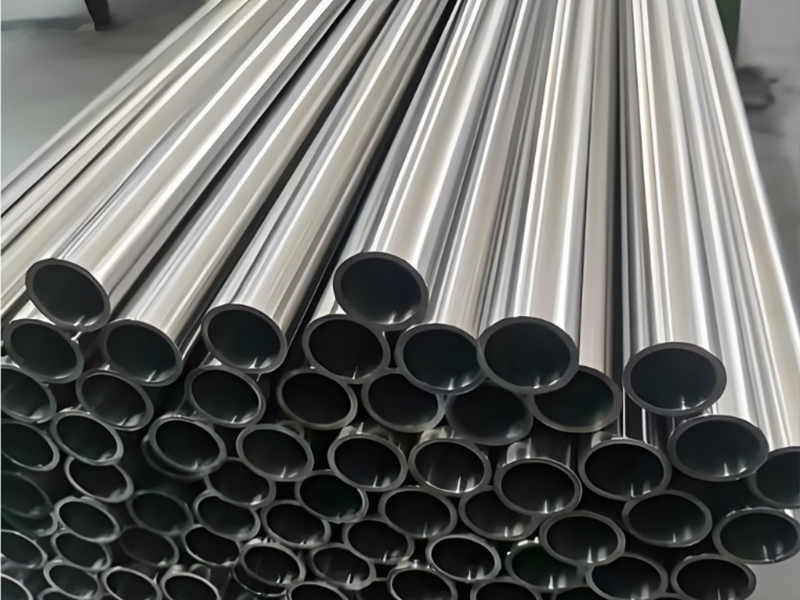
We are Zhejiang Kangxin Steel Pipe Co., Ltd. (Kangxin), a China-based manufacturer of seamless nickel alloy pipe. Nickel alloy pipe on this hub covers commercially pure nickel grades Nickel 200 (UNS N02200) and Nickel 201 (UNS N02201), both produced from a solid billet by hot piercing and cold finishing. Commercially pure nickel resists caustic and alkaline attack better than standard stainless steel, holds up well against neutral fresh water and de-aerated acids and stays ductile down to cryogenic temperatures. We manufacture this pipe to ASTM B161 (equivalent ASME SB-161) in the schedule and size range on the specification table below. We have been supplying nickel pipe since 2019, hold multiple international certifications listed on our Certificate page, and run an annual production capacity of 25,000 tons. Stock orders ship within one week, and custom production runs are typically completed in 15 to 60 days.
- OD Range 6-457 mm
- Thickness 1-65 mm
- Length ≤ 22 m
What is Nickel Pipe?
A nickel alloy pipe is a strong tubular product that typically consists of nickel and other elements, like chromium, molybdenum, iron, copper, titanium, etc. It has high resistance to corrosion, oxidation, pitting and crevice corrosion. It can also resist acids like sulfuric, hydrochloric, and phosphoric acids very well. The high nickel content makes the alloy tougher and less likely to break, which improves its mechanical properties. These characteristics make it suitable for aerospace, pharmaceutical, oil & gas, and marine applications. At Kangxin, we offer various grades of nickel alloy pipes, like nickel 200 and 201.
What are the Properties of Nickel Alloy Pipes?
Nickel alloy pipe has 6 main characteristics which make it stand out: corrosion resistance, high strength, heat resistance, resistance to stress corrosion cracking, weldability & fabricability, and low thermal expansion.
- Corrosion Resistance: The element nickel remains thermodynamically stable in aggressive environments and naturally forms a thin, adherent passive oxide film when exposed to air or moisture. This protective layer gives the alloy outstanding resistance in caustic soda, alkaline solutions, neutral freshwater, and de-aerated acid environments. The high purity of nickel also prevents galvanic attack in many chemical systems.
- High Strength: Nickel alloy pipe gets high strength because it undergoes solid-solution strengthening.
- Heat Resistance: Nickel maintains stability at elevated temperatures. This, along with the oxide layer of chromium, helps the alloy to provide high heat resistance.
- Resistance to Stress Corrosion Cracking (SCC): The high nickel content helps the alloy resist chloride-induced cracking. On top of that, the FCC crystal structure keeps the passive layer from breaking down. Together, these give the pipe strong resistance to stress corrosion cracking (SCC).
- Weldability and Fabrication: Nickel’s face-centred cubic (FCC) crystal structure provides the alloy with high ductility and low vulnerability to hydrogen embrittlement. Due to this, the nickel alloy pipe becomes highly weldable and fabricable.
- Low Thermal Expansion: Nickel alloy pipe provides low thermal expansion because nickel stabilises the lattice structure. This reduces the alloy’s atomic vibration at high temperatures.
Nickel Pipe & Tube Specifications
Our nickel pipes fully comply with the ASTM B161 and are available in a wide range of sizes and dimensions.
- StandardASTM B161 / B163
- Outside Diameters6 – 457 mm
- Length≤ 22 m
- Thickness Range1 – 65 mm
- GradesNickel 200, 201
- FormRound, Square, Rectangular, Hydraulic etc
- EndPlain End, Beveled End, Threaded
- TestingPMI, Radiography, Mechanical, Chemical
Different Types and Shapes of Nickel Pipes
We manufacture nickel alloy pipe as a seamless round product only. The two forms below cover Kangxin’s supply.
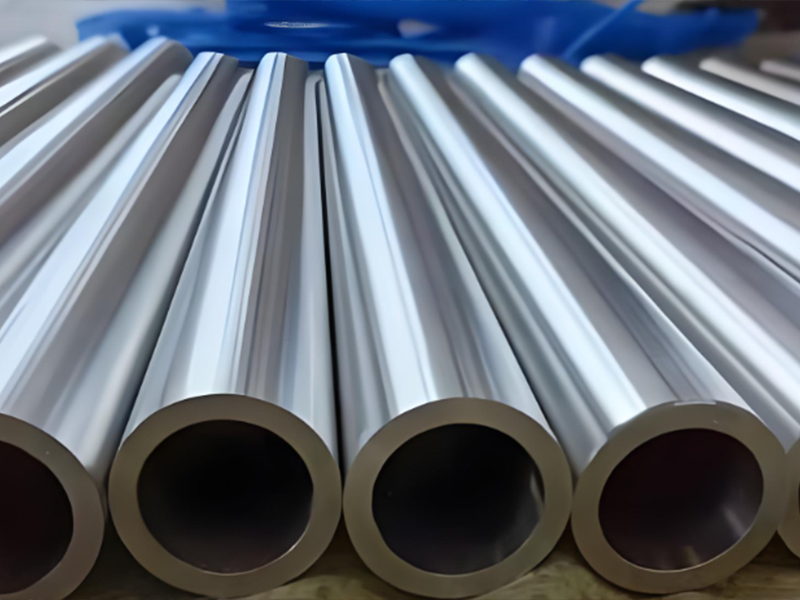 Nickel Seamless Pipe
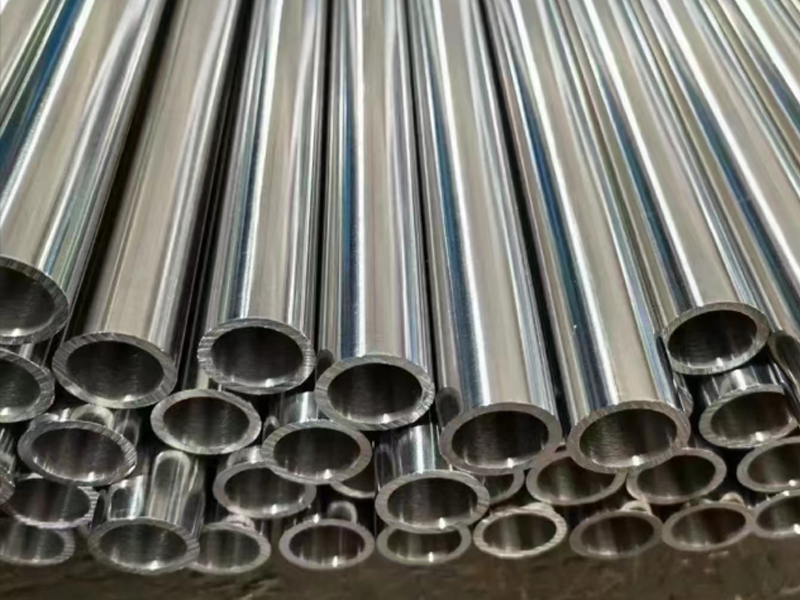 Nickel Seamless Round Pipe
Nickel Alloy Grades for Pipes
At Kangxin, we provide two grades of nickel piping: nickel alloy 200 and nickel alloy 201.
- 01
Nickel 200 Pipe
The nickel alloy 200, also known as Alloy 200, Ni-200, and Commercially Pure Nickel (CP Nickel), is a strong tubular product made of commercially pure nickel (99.0% minimum, typically 99.5% by weight per ASTM B161) known for its high corrosion resistance in caustics and alkaline environments. It is known globally by its standard equivalent designation as UNS N02200, and by its Werkstoff number as 2.4066.
- 02
Nickel 201 Pipe
Commonly known as Nickel Alloy 201, Ni-201, the Nickel 201 pipe is a commercially pure nickel-based alloy with a maximum carbon content of 0.02% (compared to 0.15% for Nickel 200), making it the preferred choice for service above 315°C (600°F) where graphitisation must be avoided. It has very good corrosion resistance to alkali environments and remains stable at elevated temperatures. Ni-201 pipe’s standard equivalent designation is UNS N02201, and it is also recognised by its Werkstoff number as 2.4068.
Industries Using Nickel Alloy Pipes
Used in acid transfer lines, heat exchanger tubing, caustic soda and solvent circulation pipelines, and distillation column reboiler and overhead lines.
Generally used in seawater cooling system pipelines, firefighting seawater supply pipes, desalination plant brine and concentrate lines, and ballast water piping systems.
In the oil and gas industry, it is mainly used in downhole tubing and surface flowlines, refinery process piping, and high-pressure injection lines.
Extensively found in boiler superheater and reheater tubes, steam generator tubing, and flue gas and exhaust gas handling pipes.
Nickel alloy pipe is used in sterilisation and pasteurisation steam lines, CIP (Clean-in-Place) chemical circulation lines, and acidic food ingredient transfer piping.
Used in vacuum system piping and cooling pipes for electronic manufacturing equipment.
Generally found in steam generator tubing, waste processing and containment transfer lines, primary coolant system piping, and chemical volume control system (CVCS) piping.
100% Certified Testing & Documentation
- EN 10204 3.1 and EN 10204 3.2 Material Test Certificates (MTC)
- Raw Materials Certificate
- 100% PMI
- Heat Treatment Charts
- Third-Party Inspection Report
- Surface roughness and size measurement
- Manufacturer Test Certificate (Impact Testing, Flattening, Flare, Bend, Hardness, Intergranular, Pitting Corrosion, Grain size, ET, UT, HT)
- Laboratory Test Certificate from the Government-Approved Lab
Frequently Asked Questions
What are the main advantages of Nickel Pipes?
The advantages of nickel pipes are good resistance to corrosive environments, high mechanical strength, resistance to stress corrosion cracking, and good weldability and fabricability.
Why choose nickel alloy pipes instead of stainless steel?
Nickel alloy pipes handle chloride environments much better than stainless steel, which tends to crack under stress in those conditions. They also hold up better in hot, strongly reducing acids where standard austenitic stainless steels stop resisting corrosion.
What’s the difference between nickel 200 and nickel 201 pipe?
The main difference between Nickel 200 and 201 pipe is that 201 has a very low carbon content (0.02% max) compared to 200 (0.15% max). This helps 201 prevent graphitisation and sensitisation at elevated temperatures above 315°C (600°F).
Can nickel alloy pipes handle high pressure?
Yes, nickel alloy pipe can handle high pressure mainly because it goes through solid-solution strengthening, which increases its mechanical strength. This directly improves the nickel alloy pipe’s tensile and yield strength.