Seamless Stainless Steel 310S Pipe
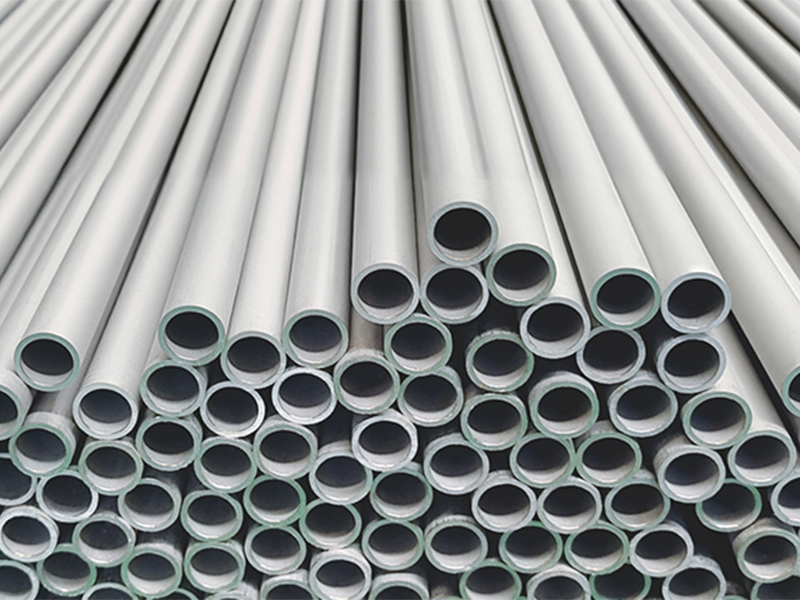
Stainless Steel 310S Seamless Pipe is a low-carbon, high-chromium, high-nickel austenitic grade manufactured by Zhejiang Kangxin Steel Pipe Co., Ltd. It carries a dual UNS S31008 / EN 1.4845 designation and fulfills all manufacturing metrics required by ASTM A312 TP310S. It contains 24.0–26.0% chromium and 19.0–22.0% nickel, with its high chromium and nickel content providing strong resistance to oxidation and corrosion during high-temperature service. The lower carbon content of 310S reduces the risk of sensitization during welding compared with higher-carbon 310, supporting fabrication where welded joints are required. SS 310S seamless pipe is suitable for heat exchangers, kilns, furnaces, and chemical processing equipment operating under sustained elevated temperatures and corrosive conditions. Kangxin supplies 310S SS pipe in various outside diameters, wall thicknesses, and lengths according to project requirements. 310S stainless steel pipe can be supplied with the required material documentation and traceability for demanding industrial applications.
As a reliable 310S stainless steel pipe supplier, we ensure our pipes meet the following specifications:
- Standard ASTM A312
- OD Range 6-1016 mm
- Thickness 1-65 mm
- Length ≤ 22 m
Stages Involved in Producing SS 310S Seamless Pipe
As a leading 310S stainless steel pipe manufacturer, we make our 310S stainless steel pipe through a precise hot extrusion or cold drawing process. We start with high-quality solid billet, pierce it to make a hollow shell and then size and straighten the pipe. To make sure that every UNS S31008 pipe has a smooth finish and has maximum corrosion resistance, it goes through solution annealing and pickling. To learn more about our manufacturing process, visit this page.
What are the Features of Alloy 310S Pipe?
AISI 310S stainless steel pipes have 4 distinct characteristics. These are high temperature, fabrication, weldability and corrosion resistance.
- High-Temperature Performance: 310S seamless stainless steel pipe features a high chromium and nickel content, providing excellent oxidation resistance, thermal fatigue performance, and cyclic heating resistance. While it can withstand intermittent oxidation up to 1150°C, its recommended continuous operating temperature is typically up to 1050°C to maintain long-term structural integrity.
- Fabrication: The AISI 310S stainless steel pipe is readily fabricated by standard commercial procedures. While tougher than carbon steel, it can be formed and machined effectively if tools are sharp and power is sufficient.
- Weldability: The pipe is generally weldable by most standard fusion and resistance techniques. The low carbon content (compared to 310) reduces carbide precipitation during welding. This ensures the joints remain strong and resistant to corrosion.
- Corrosion Resistance: The Grade Stainless Steel 310S Pipe provides excellent resistance to aqueous corrosion because of its high chromium level. It specifically excels in environments where mild cyclic oxidation or carburisation might otherwise damage lower-grade alloys.
What is the Equivalent Standard for 310S Stainless Steel?
310S pipe is commonly known as UNS S31008, which is its standard equivalent designation. Some of its global equivalents are AISI 310S, EN 1.4845, and JIS SUS 310.
| GRADE | UNS | GB | JIS | ISO | DIN/EN | GOST | |
|---|---|---|---|---|---|---|---|
| ISC | NEW | ||||||
| 310S | S31008 | S31008 | 06Cr25Ni20 | SUS310S | X8CrNi25-21 | 1.4845 | – |
100% Certified Testing & Documentation
- EN 10204 3.1 and EN 10204 3.2 Material Test Certificates (MTC)
- Raw Materials Certificate
- 100% PMI
- Heat Treatment Charts
- Third-Party Inspection Report
- Surface roughness and size measurement
- Manufacturer Test Certificate (Impact Testing, Flattening, Flare, Bend, Hardness, Intergranular, Pitting Corrosion, Grain size, ET, UT, HT)
- Laboratory Test Certificate from the Government-Approved Lab
Industries and Applications for Stainless Steel 310S Seamless Pipe
In food plants, the 310S pipe carries hot ingredients and acidic liquids through processing lines. It is chosen because it is easy to clean and does not react with the food products.
The SS 310S pipe is used to build burners, doors, and recuperators inside industrial furnaces. It handles direct exposure to fire and high-velocity gases without warping or melting.
In power plants this pipe serves as tube hangers and internal parts for coal gasifiers. It provides structural support and fluid transport in high-pressure, high-heat zones.
The 310S SS pipe is used as air grids and wind boxes to distribute air in coal combustors. It resists the heavy abrasion and intense heat caused by moving particles in the bed.
This pipe is used for burner shields and material feeding systems. It protects equipment from the high-temperature exhaust and dusty air found in the plant.
The pipe is used in smelters and continuous casting machines to move cooling water or gases. It can work safely near molten steel without losing its mechanical strength.
The AISI 310S stainless steel pipe is used to make muffles, retorts and annealing covers for metal parts that need to be heat-treated. It forms a strong barrier that keeps the metal from corroding during the heating cycle.
The 310S stainless pipe acts as the primary conduit for transferring heat between different liquids or gases. It prevents leaks and resists corrosion even when the fluids are moving at high temperatures.
The pipe is used in catalytic recovery systems, flares, and tube hangers at refineries. It can handle corrosive chemicals at very high temperatures during the oil cracking process.
Frequently Asked Questions
What is a Stainless Steel 310S pipe?
Stainless Steel 310S pipe, commonly known as 2520 stainless steel pipe in China is an austenitic stainless steel grade. It has a low carbon content (≤0.08%) and can resist oxidation at high temperatures up to 1150°C. It is one of the grades of stainless steel seamless pipe.
Difference between SS 310S and 310 pipe?
The main difference between SS 310S and 310 pipes is their carbon content. 310S has less carbon (0.08%) than 310 (max 0.25%). This makes it less likely for carbide precipitation and improves weldability and intergranular corrosion resistance.