Stainless Steel Pipe
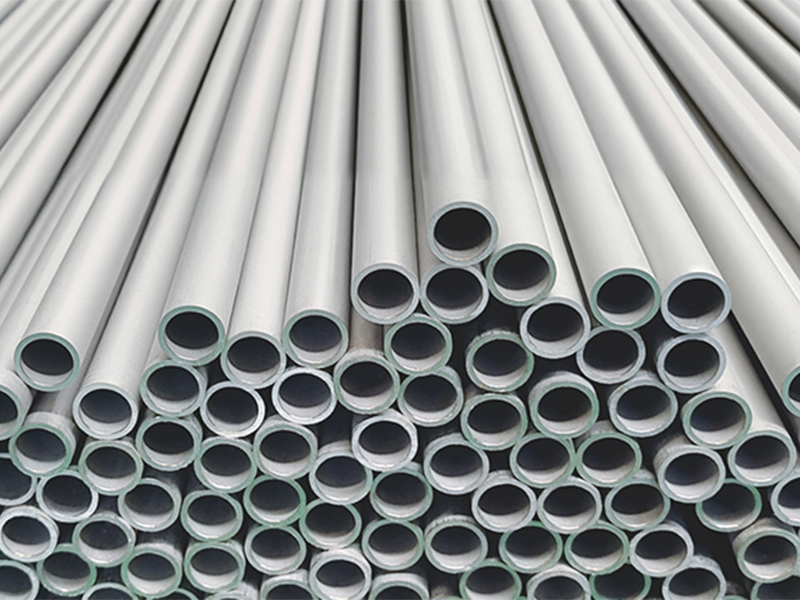
We are Zhejiang Kangxin Steel Pipe Co., Ltd. (Kangxin), a leading China-based manufacturer and global supplier of seamless stainless steel pipe. A seamless stainless steel pipe is a hollow, tubular product made from an iron-based alloy that contains at least 10.5% chromium.
The chromium forms a passive, self-healing oxide layer on the surface that resists rust and corrosion in service. We manufacture austenitic seamless stainless steel pipe to ASTM, ASME, and other international standards. The seamless construction eliminates the longitudinal weld, which enhances pressure resistance, gives uniform structural reliability, and removes a common corrosion initiation point. It also has excellent corrosion resistance in harsh environments, can handle high temperatures, and lasts a long time. This makes it a preferred choice for demanding industries such as oil and gas, chemical processing, nuclear power, and food and beverage. We hold multiple international certifications, listed on our Certificate page, and supply seamless pipe across a wide range of austenitic and duplex grades. We have an annual production capacity of 25,000 tons, and our four decades of manufacturing experience make us a trusted supplier.
- OD Range 6 – 1016 mm
- Thickness Range 1-65 mm
- Length ≤ 22 m
What is Stainless Steel Pipe?
A stainless steel pipe, also known as an SS pipe, is a tubular product made of an iron alloy, specifically a type of alloy steel, with at least 10.5% chromium. This makes it very resistant to rust and corrosion. There are 2 main types of stainless pipes based on the manufacturing process: stainless steel seamless pipe and stainless steel welded pipe. We specialise in the production of high-quality seamless pipes. The seamless construction makes it stronger as it has no weak points due to the absence of a weld. The chemical composition of this pipe is primarily iron, chromium, and nickel. Chromium forms a protective oxide layer on the surface, while nickel improves both toughness and corrosion resistance.
8 Features of Stainless Steel Pipe
Stainless steel pipe has 8 key characteristics: corrosion resistance, high-temperature tolerance, high mechanical strength, smooth internal surface, uniform wall thickness, precise dimensional accuracy, weldability and formability, and hygienic non-reactive surfaces.
- Corrosion-Resistant Material: Chromium forms a passive, rust-proof oxide layer on the surface of the pipe. This keeps the material from rusting and corroding.
- High-Temperature Tolerance: SS pipe retains its shape and mechanical properties even when exposed to very high temperatures without changing shape or losing strength.
- High Mechanical Strength: It offers superior tensile and yield strength. This enables it to handle high stresses and remain pressure-tolerant in high-pressure systems.
- Smooth Internal Surface: The inner surface of these pipes is typically uniform and low-friction. This minimises pressure drop and prevents the accumulation of sediments or process buildup.
- Uniform Wall Thickness: Seamless manufacturing of the pipe ensures a consistent wall profile. This is important for predictable stress distribution and structural stability under pressure.
- Precise Dimensional Accuracy: This pipe is made with very tight tolerances. This ensures that everything fits together correctly and makes it easier to connect parts in complex piping systems.
- Weldable and Formable: ASTM A312 pipe is easy to weld and shape, and it can be bent, formed, and made to fit specific design and layout needs.
- Hygienic and Non-Reactive: The non-porous surface of stainless steel pipe is non-reactive to most process media. This makes it ideal for sensitive applications like food, beverage, and pharmaceutical production.
Stainless Steel Pipe & Tube Specifications
Our pipes are manufactured to meet different specifications that include the OD range, wall thickness, lengths, surface finishes, and the standards they comply with.
- StandardASTM A312 / A213
- Outside Diameters6 – 1016 mm
- Length≤ 22 m
- Thickness Range1 – 65 mm
- Surface FinishBright, Annealing, Polished, Mirror, Brushed
- FormRound, Square, Rectangular, Hydraulic etc
- EndPlain End, Beveled End, Threaded
- TestingPMI, Radiography, Mechanical, Chemical
Types of Stainless Steel Pipe
Stainless steel pipes are categorized based on their manufacturing process, shape and intended application. The following are the 4 types we produce:
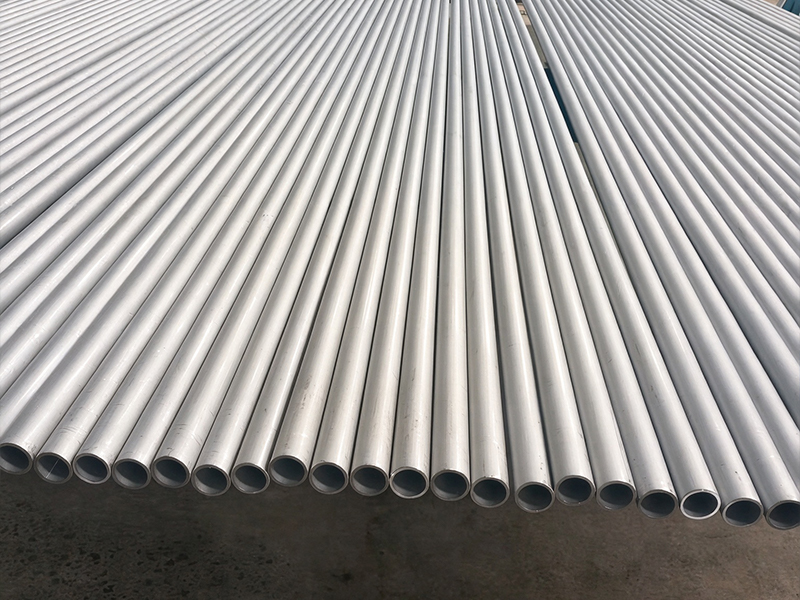 Seamless Stainless Steel Pipe
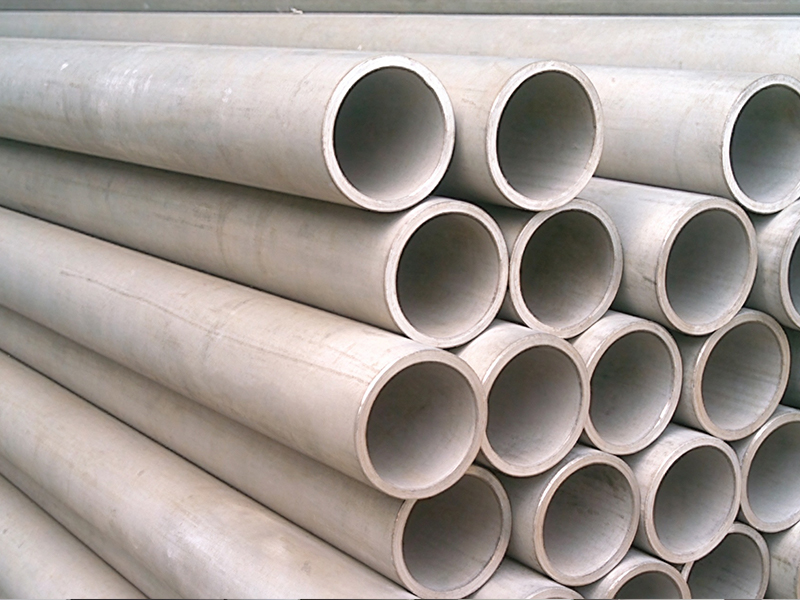 Round Stainless Steel Pipe
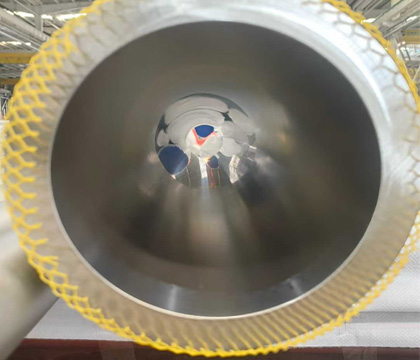 Stainless Steel High Pressure Pipe
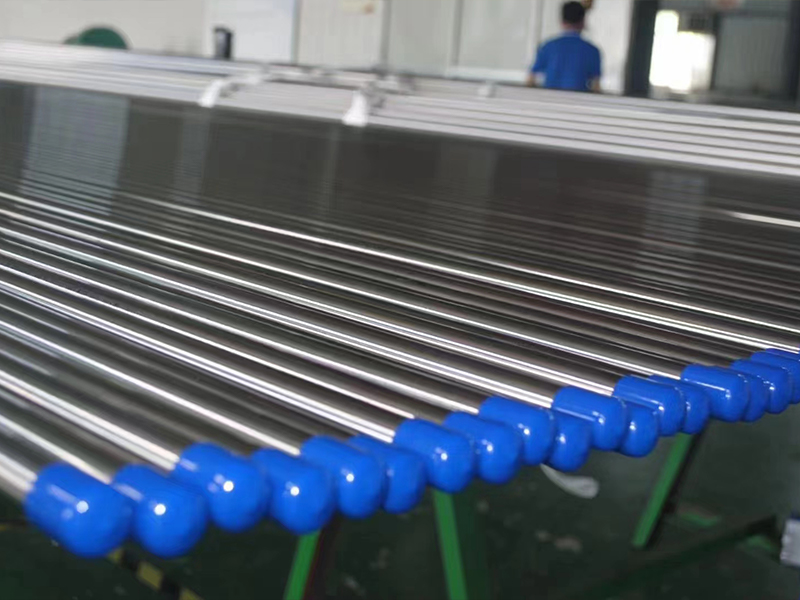 Polished Stainless Steel Pipe
Types of Stainless Steel Based on Composition
There are 3 types of stainless steel based on composition. These include Austenitic stainless steel, Ferritic stainless steel and Martensitic stainless steel.
- 01
Austenitic
Austenitic stainless steel is the most common type. It contains a relatively high nickel content (about 8-12%), which stabilises the austenitic structure. It is resistant to rust, easy to form and weld, and usually non-magnetic after annealing. 304, 304L, 316L, 321 and 347 are the most widely used grades that we provide. Kangxin supplies seamless pipe mainly in austenitic grades, with duplex and super-duplex covered separately.
- 02
Ferritic
Ferritic steel has a low level of nickel and is magnetic. It is less expensive than austenitic steel and can endure stress corrosion cracking better. Common grades include 430 and 409. Kangxin does not manufacture seamless pipe in ferritic grades.
- 03
Martensitic
This steel is characterised by higher carbon content and lower nickel. Heat treatment makes it harder and stronger. It offers high strength and hardness, but it doesn’t resist corrosion as well as the other two types. It is magnetic and is typically supplied as bar, forgings, or plate for fasteners and valve parts, not as seamless pipe. Kangxin does not manufacture seamless pipe in martensitic grades.
Types of Stainless Steel Based on Composition
- 01
TP304L Stainless Steel Pipe (UNS S30403)
TP304L is the low-carbon version of TP304, with carbon capped at 0.030% instead of 0.08% for TP304. The lower carbon suppresses chromium-carbide precipitation in the heat-affected zone during welding, so TP304L is specified for welded fabrications where a post-weld solution anneal is not practical. To ASTM A312, minimum yield strength is 170 MPa (25 ksi) and minimum tensile strength is 485 MPa (70 ksi), with corrosion performance similar to TP304 in typical chemical and mild‑marine service.
- 02
TP316L Stainless Steel Pipe (UNS S31603)
TP316L is a low-carbon, molybdenum-alloyed austenitic stainless steel pipe grade. Around 2% molybdenum improves resistance to chloride pitting and general corrosion in acidic and marine environments. The low carbon level limits sensitisation in welds. To ASTM A312, minimum yield strength is 170 MPa (25 ksi) and minimum tensile strength is 485 MPa (70 ksi). It is a common choice for chemical processing, coastal service, pharmaceutical piping, and lower-chloride offshore duty.
- 03
TP321 Stainless Steel Pipe (UNS S32100)
TP321 is a titanium-stabilised austenitic stainless steel grade. Titanium forms carbides with carbon to prevent intergranular corrosion between 425 and 815 °C. It is used for high-temperature service where post-weld heat treatment is not practical. Minimum yield strength is 205 MPa and minimum tensile strength is 515 MPa per ASTM A312.
- 04
TP347 Stainless Steel Pipe (UNS S34700)
TP347 is a niobium-stabilised austenitic stainless steel grade. Niobium, with at least ten times the carbon content, prevents intergranular corrosion at sensitising temperatures. It is preferred over TP321 for long-term service between 425 and 815 °C. Minimum yield strength is 205 MPa (30 ksi) and minimum tensile strength is 515 MPa (75 ksi) per ASTM A312. It is rated for continuous oxidation service up to about 870 °C (1600 °F). Common uses are petrochemical and power piping.
Stainless Steel Pipe Applications
SS pipes are used for primary potable water transmission lines and internal plumbing in high-end facilities. This ensures water remains pure and free from corrosion byproducts.
This pipe is employed for conveying highly corrosive acids, bases, and organic chemicals at high temperatures and pressures within reactor and distillation units.
This austenitic stainless steel pipe is used in demanding exploration and production environments, including surface piping, wellhead piping, and high-pressure flow lines in refineries.
This pipe is used in process lines that transport sterile ingredients and final products. These applications rely on the polished stainless steel pipe for hygienic, non-reactive surfaces.
Stainless steel pipe is used in aircraft hydraulic lines, fuel delivery systems, and engine and APU components. The reason is high strength, fatigue resistance, and behaviour during a fire. Stainless steel is not chosen for absolute low weight, since aluminium and titanium are lighter. It is chosen for its strength-to-weight ratio and its high-temperature performance.
This pipe is critical for moderator and coolant transport, heat exchangers and auxiliary systems where radiation resistance and long-term material stability are paramount.
The pipe is used in shipbuilding, platform risers, and ballast systems due to superior resistance to chloride-induced corrosion from seawater.
The stainless steel seamless pipe forms the core tubing for pasteurisation, brewing, dairy processing, and clean-in-place (CIP) systems. It prevents contamination of the product.
100% Certified Testing & Documentation
- Raw Materials Certificate
- 100% Positive Material Identification (PMI)
- Heat Treatment Charts
- Third-Party Inspection Report
- Surface roughness and size measurement
- Manufacturer Test Certificate (Impact Testing, Flattening, Flare, Bend, Hardness, Intergranular Corrosion, Pitting Corrosion, Grain size, Eddy Current (ET), Ultrasonic Testing (UT), Hydrostatic Testing (HT), etc.)
- Laboratory Test Certificate from the Government-Approved Lab
Technical Datasheet
The following technical resources are critical for pipe system design and engineering. Detailed information on pipe dimensions, tolerances, and pressure ratings is available in our technical catalogue.
Frequently Asked Questions
How to cut stainless steel pipe?
Stainless steel pipe can typically be cut using abrasive cutting wheels (chop saws), band saws, or specialized pipe cutters. For thick walls or precise, burr-free cuts, an orbital pipe cutting machine or plasma/laser cutting is utilised.
Difference between a stainless steel pipe and a tube?
The difference between stainless steel pipe and tube is that SS pipes are typically specified by a nominal pipe size (NPS) and schedule (wall thickness). This emphasises fluid conveyance. SS Tubes, on the other hand, are specified by precise outer diameter (OD) and wall thickness, focusing on structural, instrumental or heat exchange applications.
Is stainless steel pipe safe for drinking water?
Yes, stainless steel pipe is safe for drinking water. Grades 304 and 316 are stable and don’t leach harmful chemicals in the water. The smooth, corrosion-resistant surface also prevents bacteria from growing and biofilm from forming. This makes it a very hygienic choice.
Which stainless steel pipe grade is most commonly used?
The most commonly used grade is ASTM A312 pipe Grade 304/304L. It offers a favourable balance of corrosion resistance, strength and cost. This makes it suitable for many general industrial and architectural applications. 316/316L is the second most common preferred grade for marine or high-chloride environments.
How are stainless steel pipe connections done?
Seamless stainless steel pipe is commonly joined in three ways: flanged, threaded and butt-welded. Flanged joints suit high-pressure lines and locations needing disassembly. Threaded joints are used for smaller, low-pressure systems. Butt welds provide permanent, high-integrity joints. The selection depends on pressure, code requirements and disassembly needs.
Why are stainless steel pipe supports important in piping systems?
In piping systems, stainless steel pipe supports are important because they distribute the weight of the pipe, the fluid being moved and any dynamic loads (like pressure surges or earthquakes) equally. They prevent excessive stress, vibration, sagging and potential damage to the pipe and connected equipment.
How are stainless steel pipes made?
The stainless steel pipe manufacturing process begins by heating a solid billet of stainless steel. Then a mandrel is used to pierce it in the centre to make a hollow shell. This hollow shell is hot-rolled and cold-finished to get the required precise dimensions, wall thickness, and surface finish.